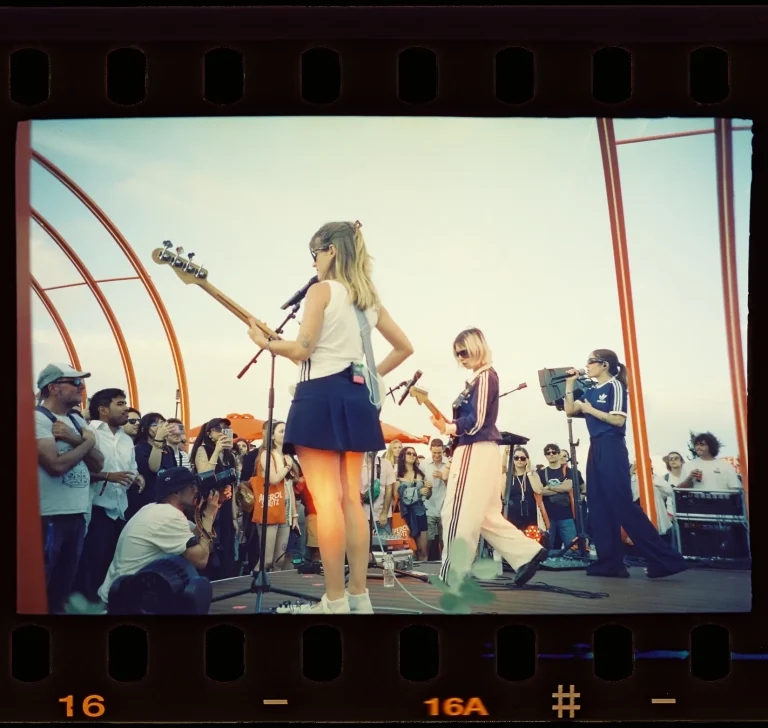
From shooting to developing: how the process works.
You have an analog SLR or compact camera that you bought at a flea market, online, or from a local photography shop. Or perhaps you borrowed your father’s camera or inherited it from your grandmother. Now what?
The first step is to make sure it works properly and is in good condition. If your camera is an SLR, open the back cover, remove the lens, and carefully clean both the front and rear lens elements. A glasses cleaning cloth is usually enough. You can also use an air blower or compressed air to remove dust or dirt particles. Do not blow directly onto the lens, as you could leave saliva particles on it!
If the camera is manual and allows it, before loading the film, test the shutter several times using different shutter speeds and apertures to make sure the shutter opens correctly and that the various speeds are working properly.
Insert a new battery and check that the light meter is functioning correctly.
Once you have completed all these checks —which may seem like a lot, but will only take about fifteen minutes— it is time to load a roll of film and start shooting.
At VM Foto, we sell different types of photographic film: color negative, black and white, or slide film, available in both 35 mm and 120 formats, and from brands such as Kodak, Fuji, Cinestill, Ilford, and Kentmere.
To test your camera, we recommend an affordable film such as the classic Kodak Gold 200: a medium-speed film with very fine grain, excellent sharpness, and warm color tones. It is also available in tripacks, ideal if you plan to keep shooting and want to save a little money.
Load the film in dim light and, before closing the back cover, make sure the film advance mechanism has properly engaged the film. If you are unsure how to do this, here is a YouTube tutorial. You are also welcome to visit our lab, and we will gladly help you!
Now comes the moment to shoot and express your creativity: the most enjoyable part of the process. However, if you want your photos to turn out well, carefully check your camera settings, especially if it is manual: ISO, shutter speed, aperture, focus, and flash.
Take your time and do not rush. Analog photography is something that develops slowly: you need to train your eye gradually, and every shot has a cost.
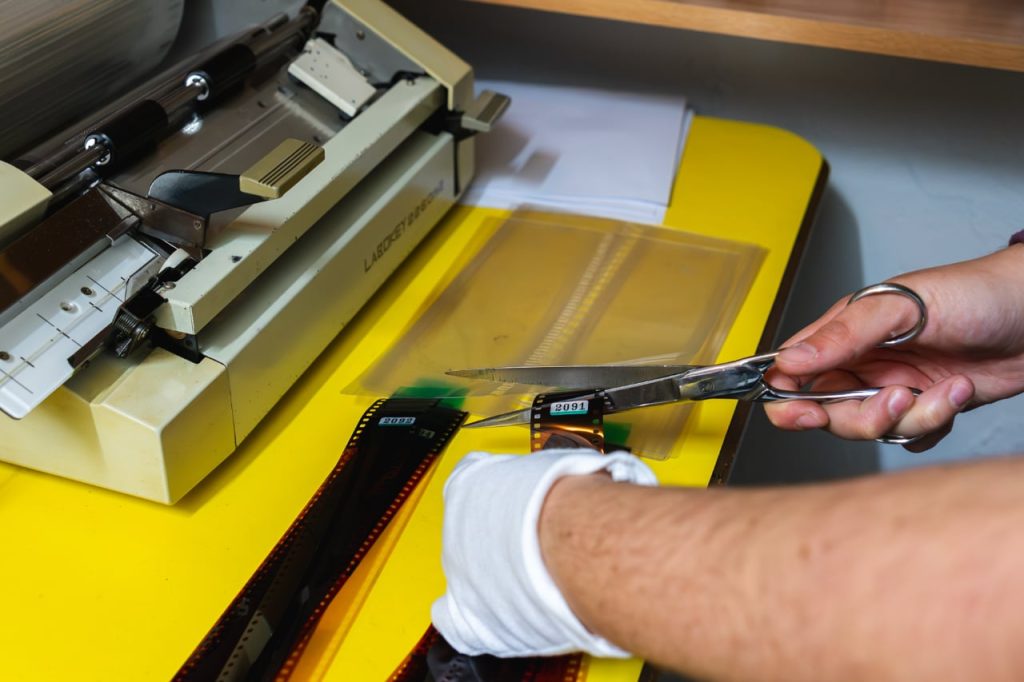
Once you reach the end of the roll —usually 24 or 36 exposures— do not force the film, and rewind it properly. To do this, press the small button usually located on the bottom of the camera to release the film advance mechanism; otherwise, you could tear the film perforations.
When you finish rewinding, open the camera in dim light and remove the roll. If you are not sure whether it has rewound completely, bring it to our lab and we will remove it in the darkroom to avoid accidentally exposing the film.
From here begins the magic of the lab, where we process your film using the appropriate method: C-41 color negative, black and white, slide film, or ECN-2 cinema film.
The most common process is C-41 development, the standard for color negative film, which develops negatives at 37.8 ºC (100 ºF). This process was introduced by Kodak in 1972 to unify the different color development systems.
At VM Foto, we use two Noritsu processors for this process, allowing us to develop your negatives within 24 to 48 hours with the highest quality and care, guaranteeing professional results. More than 25 years of experience in the industry support our work.
I’m not sure what to order — what options do I have?
The most requested option is usually film development + digital scanning, which we discuss in more detail in this article (link).
Another very popular option is our analog packs: negative development + traditional photographic paper prints + digital scanning. This alternative has become increasingly popular in recent years. Take your images home on chemically developed photographic paper and preserve your memories just like people did in the 1980s and 1990s!
You can choose between glossy or semi-matte paper, with or without white borders.
If you simply want to preview the images before deciding what to do, you can also order a contact sheet —a classic of traditional photography— or request negative development only.